|
THE GALTA NEWSLETTER
August 2026 · Issue 02
|
|
IN THIS ISSUE Feature: Chinese in Saudi schools, two years on • Our first competition winner • Save the dates: Olena Rossi’s November course • Looking back: CEFR webinar & Foundations workshop • Research from the region • Start a SIG • New writing competition • Your news
|
|
|
What does it take to teach a nation a new language?
Issue 02 opens with a question of scale. Saudi Arabia set out to put Chinese in its public schools; two years in, Dr Ayman Alzahrani returns to the evidence. Also inside: the winner of our first writing competition, a course worth clearing your November for, and what our community has been up to.
|
FEATURE ARTICLE · 5 MIN READ |
|
Desiring Chinese as a Foreign Language Policy in Saudi Arabia
A 2026 retrospective
|
Dr Ayman A. Alzahrani Director, Center for Professional Excellence in ELT, English Language Institute, King Abdulaziz University |
Two years ago, in Desiring Chinese as a Foreign Language Policy in Saudi Arabia, my co-authors and I argued that the Kingdom’s decision to teach Chinese in public schools was driven by political ambition, economic expectation and diplomacy rather than by anything happening in classrooms. The policy had been announced. The capacity to deliver it had not been built. There were too few teachers, no regulated materials, no practice beyond the lesson, no clear route from school to university, and no local Chinese-speaking community for learners to use the language with. Two years on, three of those five look very different. Spearheading with teachers and reach. A first cohort of 175 Chinese teachers arrived in 2024, and Chinese now sits on the timetable in more than a hundred intermediate schools. Official figures put about 56,000 students in public schools studying the language as of mid-2025, with the Ministry of Finance projecting more than 85,000 by the end of 2026. Behind that expansion sits a pipeline: 325 Saudi teachers hold scholarships to study Chinese and take master’s degrees in teaching it at Chinese universities. The Ministry of Education’s stated objective is to establish Chinese as a third language alongside English, and the staffing plan now matches the ambition. Materials and destinations have moved too. In April 2025 the Ministry signed a memorandum with China’s Center for Language Education and Cooperation to have Saudi and Chinese experts jointly write and review a school curriculum, which should displace the unregulated “learn Chinese fast” material that filled the vacuum while nothing official existed. Universities have firmed up the other end. King Abdulaziz University requires its Chinese-language undergraduates to reach HSK Level 4 before graduation, offers HSK preparation and testing, and runs streams in translation, professional communication, media and tourism. A school leaver can finally see where the subject leads. | | “Teaching Chinese and teaching it to the point of use are two different projects.” |
What has not changed is the part we flagged as decisive. There is still no Chinese-speaking community in the Kingdom to practice with once the lesson ends, and no measurable labor-market demand pulling students through. In the first year of the rollout, grades in Chinese did not count toward a student’s cumulative GPA, a reasonable way to lower the stakes at launch that also told students exactly how much the subject weighed. English remains the working language of Saudi higher education and business, so Chinese competes for a slot students already associate with a payoff. Delivery is the second open question. A curriculum drafted between Riyadh and Beijing still has to reach thirteen education regions with very different staffing and very different readiness, and national policy tends to thin out on the way to the classroom. Closing that gap and the return is substantial. Chinese can serve the Kingdom as a second diplomatic language, as a language of professional translation, and as a working language for trade and supply-chain management with China and across the region. It has obvious uses in the sectors Saudi Arabia is betting on, from advanced manufacturing and artificial intelligence to renewable energy and tourism, and in academic exchange. It also allows students to study China through Chinese rather than through English, which is a different intellectual relationship altogether. Whether that return arrives is a question of measurement, so the next phase has to be evidence-led rather than announcement-led. That calls for longitudinal tracking of learners and teachers covering proficiency, motivation and attrition; a labor-market analysis by sector, so that supply can be matched to real openings; HSK exit targets tied to grade levels; licensing standards for teachers of Chinese; and exchange programs and virtual speaking communities to stand in for the speech community the country does not have. It also means protecting the standing of Arabic as the language of identity and of knowledge, a condition no third language should be allowed to erode. Teaching Chinese and teaching it to the point of use are two different projects. In 2024 the first was in doubt. It no longer is. The second turns on whether the destinations beyond the classroom door exist by the time this cohort reaches them.
|
|
SAVE THE DATES · NOVEMBER TRAINING COURSE
Using Generative AI in Item Writing
|
Olena Rossi, PhD Independent language assessment consultant; PhD in Language Testing, Lancaster University; founding convenor of EALTA’s AI for Language Assessment SIG |
A hands-on course on using generative AI across the full item-writing cycle while protecting item quality and validity: prompt design for reading texts and listening scripts, AI-generated audio, writing and speaking tasks from text, image and video, and the judgement to know when not to use it. No prior AI knowledge needed.
DATES 7 · 14 · 21 · 28 November |
FORMAT 4 live sessions · 16 hours |
EXTRAS Optional practical strand |
PRICES & REGISTRATION ANNOUNCED SOON
|
|
COMPETITION WINNER · 4 MIN READ |
|
What Gets Lost in the Feedback
Chosen from a strong field of member submissions to our July competition, congratulations to
Dr Asma Al Shehri WINNER
WHY THIS PIECE WON What set this essay apart was that it is grounded in work actually carried out at King Saud University, not argued from the literature but lived in her own classrooms. And it was fascinating to read: her studies caught not only the gap between AI and human feedback, but what happens to that feedback again when a student asks for it in Arabic, a question only someone teaching here would think to ask. This is exactly the authentic regional voice GALTA exists to champion.
When ChatGPT arrived in our EFL writing classrooms, the first question we asked was whether it could assess language truthfully or not. That question has largely been answered: yes, it can. Studies across contexts confirm that AI-generated feedback identifies grammatical errors, flags awkward phrasing, and organization with impressive speed and consistency. However, accuracy was never the whole story of assessment. Feedback is not just a verdict on a text. It is a relationship conducted via language and it is in that relationship that AI still falls short. | | “Feedback is not just a verdict on a text. It is a relationship conducted via language.” |
In two recent studies at King Saud University, I used Appraisal Theory to examine what actually happens, linguistically, when machines take over the teacher’s chair. The first compared feedback written by experienced EFL teachers with feedback generated by ChatGPT on the same student essays. The differences were not in what was corrected but in how the evaluator was present. Teachers said things like “I admire your insightful observations” and “I look forward to your next essay.” ChatGPT produced not a single expression of affect. Its comments were accurate, polite, and emotionally vacant, evaluating the text while never quite addressing the writer. The second study followed the feedback one step further, into translation. Because many of our learners read feedback more comfortably in Arabic, ChatGPT is increasingly asked to translate its own comments. Here the interpersonal erosion deepened and in the Arabic versions, the little emotional language that existed disappeared entirely, negative evaluations and directives multiplied while direct address of the learner declined. The student was repositioned and was no longer a partner in the dialogue about writing, but a recipient of instructions. The voice became more distant precisely for the learners who most need warmth and encouragement to stay engaged. Why does this matter for assessment? Because decades of feedback research tell us that learners act on feedback they trust, and they trust feedback that feels addressed to them. Praise, empathy, and individualized encouragement predict engagement, self-efficacy, and uptake. An assessment system that is technically correct but interpersonally flat may be efficiently ignored. None of this is an argument against AI in language assessment, but an argument for knowing exactly what we are delegating. A sensible division of labor is emerging: AI can handle the tireless, form-focused work of surface correction, and teachers do what only someone who knows the learner can do. Teachers can judge growth, frame criticism kindly, and sustain the motivation that keeps a novice learner writing. When AI output crosses languages, human review becomes non-negotiable, because translation compounds the flattening. The age of AI has not made language assessment easier; it has made it more layered. We now assess the learner’s language, the machine’s language, and the space in between. Our task as a regional assessment community is to build that human oversight into policy, rater training, and classroom practice. In our pursuit of efficiency, the one thing feedback cannot afford to lose is its human voice and it should not be lost in AI assessment practices.
Dr Asma Al Shehri is Associate Professor of Applied Linguistics at King Saud University, Advisor in the Office of the President, and Vice Chair of the English Language Skills Department. She is the inventor of the Appraisal Tagger, a patented linguistic analysis program, and a multiple recipient of KSU Research Excellence Awards. As our competition winner, she also receives a credit to attend a GALTA workshop of her choosing this year.
|
|
|
|
LOOKING BACK
|
CEFR: What It Is and What It Isn’t
Dr Kristof Savski gave us a sharp, generous hour on 25 years of the CEFR, where it serves us, where it misleads, and what it cannot see above B2. The discussion ran well past the hour, which tells its own story. If you missed it, the full recording is waiting in the members’ library.
|
|
Foundations of Effective Educational Assessment
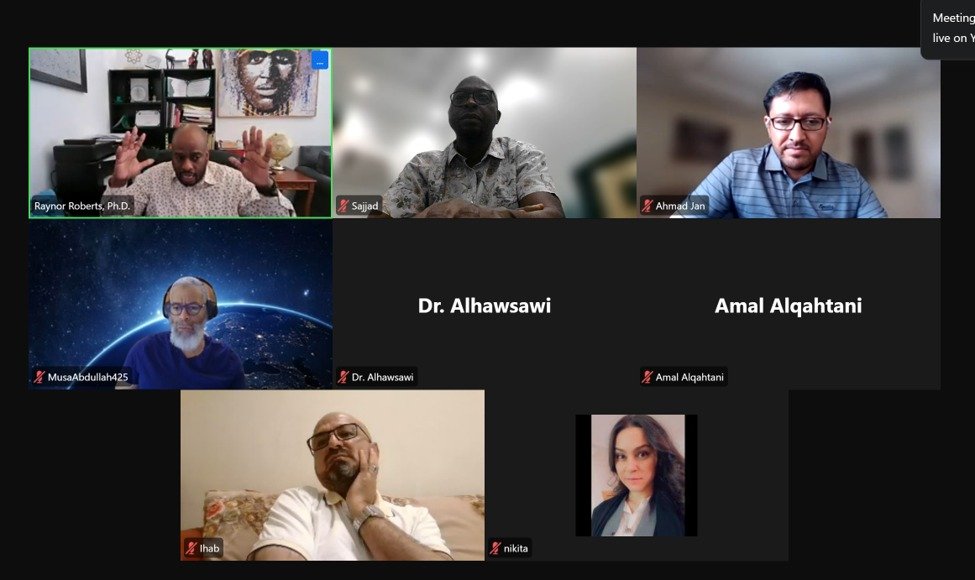
Dr Raynor Roberts ran three days that were exactly what we promised: hands-on, practical, and immediately usable. Participants left with assessments they had written, critiqued, and rebuilt themselves, along with their certificates of attendance. Thank you to everyone who gave up a July weekend to sharpen their craft.
|
FROM THE GALTA TEAM
|
One issue in, and this newsletter is already doing what we hoped: carrying your voices. This month it holds a feature from Jeddah, a prize-winning essay from Riyadh, research from Muscat and beyond, and member news we are proud to share. Keep it coming. The next issue is only as good as what you send us.
|
MEMBER NEWS
|
Dr Montasser Mohamed Abdelwahab Mahmoud
Associate Professor of English, Imam Abdulrahman bin Faisal University
A forthcoming book, The Theory of Semantic Density in Religious Translation, introducing a layered framework for translating sacred terminology, and a new article on supporting non-English-major law students with legal English in rEFLections, 33(2).
|
|
RESEARCH FROM THE REGION
|
Exploring English Teachers’ Creativity in Classroom Practices and Assessments
Mousavi, K., Shokri, A., & Khalili, S. (2026).
Asian-Pacific Journal of Second and Foreign Language Education, 11, 47.
A Muscat-linked team maps which levels of Bloom’s taxonomy EFL teachers actually reach in class and in their test items. Spoiler: remembering and understanding dominate; creating barely appears.
|
|
Development and Validation of the EFL Listening Test Anxiety Scale
Ghorbanpoor, M., Mathew, B. P., Al Ofi, A. A. N., & Khattak, Z. I. (2026).
Language Testing in Asia, 16, 6.
From the University of Technology and Applied Sciences, Oman: a new validated scale for the anxiety that listening tests, specifically, produce, from audio quality to environmental tension.
|
|
Start a SIG
Our Special Interest Group framework is now live: what SIGs get, how to propose one, and how we support them. Five members and an idea is all it takes.
|
|
Share your news
New article, award, talk, or role? Send a title, a sentence, and a link to submissions@galta.org and we will feature you in an upcoming issue. Deadline for the next issue: 25 August. |
|
|
|
POLL RESULTS · YOU VOTED
The verdict: retire “native speaker equals gold standard”
Last month we asked which assessment myth deserves retirement, and your vote was unanimous:
|
“Native speaker equals gold standard”
100%
|
WHAT THE RESEARCH SAYS
Students agree with you. In a study at a Saudi university published this year, learners preferred non-native English-speaking teachers for every core skill: listening, speaking, reading, and writing, and more than two thirds picked them for “understanding me in class.” Students still rated native speakers higher for teaching pronunciation, and they rated experienced teachers, native or not, as best at explaining complex grammar. The gold standard, it turns out, is knowing your learners (Qari, 2026).
The field agrees with you. A major review in Language Teaching surveyed decades of studies on “native” and “non-native” teachers and found no evidence that the label predicts teaching quality. What the research does document is its effect on hiring and careers: the distinction operates as a professional hierarchy, entangled with race, nationality, and passports rather than with skill in the classroom (Selvi, Yazan & Mahboob, 2024).
And our region lives it. Novice Saudi TESOL teachers describe the dichotomy as “power-driven rather than skill-based,” and meet it with quiet agency and an unshaken professional self-image (Aljehani & Modiano, 2025).
Qari, I. (2026). Frontiers in Education, 11:1804279. doi.org/10.3389/feduc.2026.1804279 · Selvi, A. F., Yazan, B., & Mahboob, A. (2024). Language Teaching, 57(1), 1–41. doi.org/10.1017/S0261444823000137 · Aljehani, K., & Modiano, M. (2025). Language Teaching Research. doi.org/10.1177/13621688251368241
|
|
|
NEW MEMBER COMPETITION
Write for us: Washback
July’s competition drew a wonderful stack of submissions, so we are running it back. This round’s prompt: washback in language testing and assessment, how tests shape the teaching and learning around them. Send us 300 to 500 words. The 500 is a hard ceiling: not a single word more.
The winning piece is published in the next issue, and the writer earns one free workshop session of their choosing. To be clear, that is a single session, not a full multi-day course like our November programme.
DEADLINE: 25 AUGUST
|
|
|
THIS MONTH’S POLL · JUST FOR FUN
Would you let AI write your test items?
Tap your pick. Results in the next issue, and whatever you answer, Olena Rossi’s November course will meet you where you are.
|
|
|
Know someone who should be reading this?
Forward this issue to a colleague. Membership is currently free, and it comes with events, recordings, tools, and the regional community.
|
|
Gulf Association for Language Testing and Assessment
|
| |
|