|
THE GALTA NEWSLETTER
November 2026 · Issue 05
|
IN THIS ISSUE Item writing with generative AI • Teaching and assessing Turkish in the Gulf • Myriam Iliovits on EMI and validity • Action research at Princess Nourah University • Dates for your diary • The digest: calls, conferences and jobs |
|
|
Item Writing with Generative AI: A Shortcut or a New Skill?
ChatGPT can draft a reading passage and ten questions before your coffee cools. Some will have two right answers. Dr Olena Rossi shows how to catch them, and she’ll coach you herself in GALTA’s November course.
|
|
FEATURE ARTICLE · 5 MIN READ
|
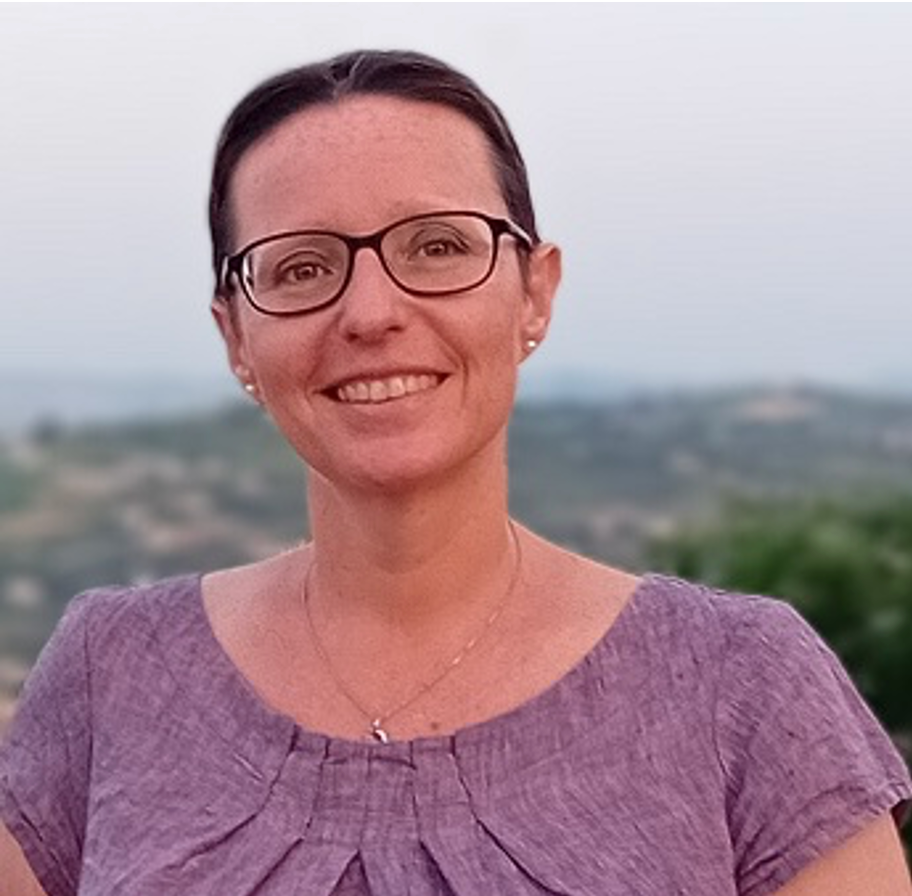 | Dr Olena Rossi PhD in Language Testing, Lancaster University · Founding convenor, EALTA AI in Language Assessment SIG |
| | “Generating twenty questions may take seconds; checking them, rejecting weak ones and repairing the rest can take much longer.” |
Every language test is about items: the questions, tasks and prompts that test-takers respond to. Item writing is the craft of translating a test’s design and specifications into these concrete materials. It is easy to overlook, yet a test can only be as good as its items.
Consider a reading task. The item writer must select or create a suitable text, develop items that target the specified reading abilities, and ensure that the items genuinely assess these abilities rather than relying on test-takers’ background knowledge or providing unintended clues through weak distractors, for example.
The importance of item writing is difficult to overstate. An ambiguous question, an incorrect key or a task that misses the intended skill can undermine the interpretation of scores and the decisions based on them. Yet producing good items is slow and demanding. It requires strict adherence to test specifications, specialist knowledge of language, proficiency frameworks and assessment principles, and practical skills that take time to develop.
Demand keeps growing. Meanwhile, demand for language tests keeps growing. People need evidence of proficiency for university admission, immigration, employment and professional certification. Online delivery allows more frequent testing, creating a need for multiple secure test forms. Adaptive tests, which select items according to each test-taker’s performance, require extensive item banks. Test providers - from large-scale examination bodies to universities - need more items, faster. Unsurprisingly, they are turning to technology.
Technology has offered partial solutions for years. Traditional automatic item generation (AIG) uses item templates that have variable elements, allowing software to produce numerous variants. This approach works well for some subjects, such as mathematics, but is less suited to language assessment, where texts and communicative contexts vary widely. Developing the templates also demands substantial expertise and effort.
Then came generative AI. Then came the public arrival of generative AI (GenAI) in late 2022. Suddenly, anyone could ask a chatbot to create a reading passage, write multiple-choice questions or devise a speaking task in seconds. Unlike traditional AIG, GenAI can produce items from prompts, without predefined item templates. No surprise, then, that GenAI use in item writing has expanded rapidly. GenAI can draft or adapt texts, generate multiple-choice, gap-fill and other types of items, devise speaking and writing prompts, and produce audio and images. For item writers facing a blank page or a tight deadline, these possibilities are appealing.
Speed is not quality. But speed should not be confused with quality. A plausible-looking multiple-choice item may have two correct answers, weak distractors or clues that make reading the passage unnecessary. A question intended to assess inference may instead test recognition of explicitly stated information. AI-generated texts can contain fabricated facts or cultural stereotypes, raising concerns about accuracy and fairness. These problems help explain why initial enthusiasm might give way to frustration. Generating twenty questions may take seconds; checking them, rejecting weak ones and repairing the rest can take much longer. Sometimes writing an item from scratch is easier than fixing an AI-generated one.
Not a return to human-only tests. Does this mean returning to entirely human-written tests? Hardly. Used skillfully, GenAI can reduce the burden of starting from scratch and speed up parts of item development. For example, an item writer might use it to suggest topics, choose one, request a draft text, refine that draft and then work collaboratively with GenAI to develop questions aligned with the specifications.
A new literacy. Working this way requires more than knowing how to type a prompt. Item writers need AI literacy: the ability to choose suitable tools, turn specifications into precise instructions, recognise recurring errors and critically evaluate outputs. They must know when to revise a prompt and when to reject an output. Above all, they need assessment expertise to judge whether a polished-looking item actually measures its intended construct.
The future is therefore unlikely to involve choosing between humans and AI. Instead, item writing may increasingly become a collaboration in which AI supports drafting and production while people make crucial design decisions, exercise professional judgement and safeguard quality. The goal is not simply to generate more items. It is to develop better ones.
|
ABOUT THE AUTHOR Dr Olena Rossi holds a PhD in Language Testing from Lancaster University and is the founding convenor of the EALTA AI in Language Assessment Special Interest Group. Her work focuses on item writing, test development and the use of generative AI in language assessment. She leads GALTA’s course on the same subject, which starts on 7 November: details below. |
|
LEARN IT WITH THE AUTHOR · GALTA TRAINING COURSE · BOOKING CLOSES 5 NOV Using Generative AI in Item Writing Sixteen hours of hands-on training with Dr Olena Rossi across the full item-writing cycle: prompt design, reading and listening items, AI-generated audio, writing and speaking tasks, and the judgement to evaluate, revise or reject what the machine produces. Individual feedback from the trainer on an optional practical strand. DATES Sat 7 · 14 · 21 · 28 November | FORMAT Live on Zoom · 12:30–16:30 KSA | PRICE Members £190 · non-members £230 |
Members: your access code is in your members’ email. Click “Enter access code” on the ticket page. |
|
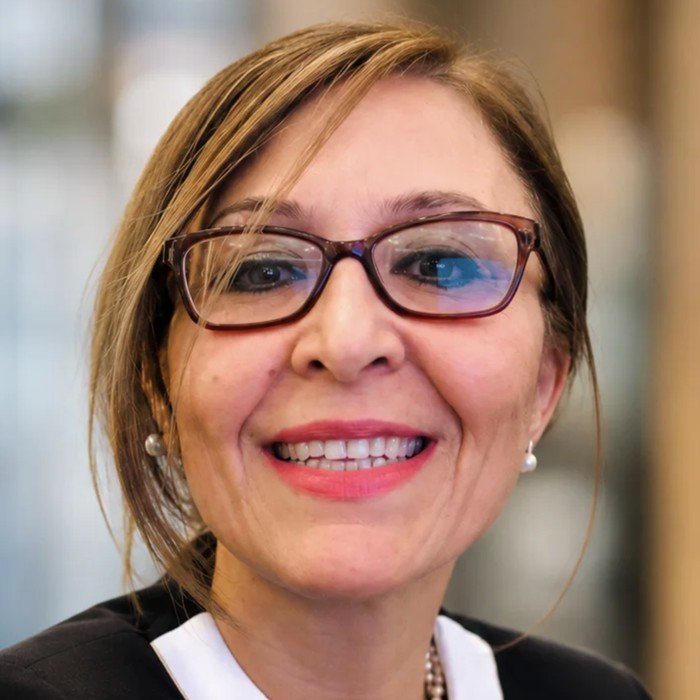 | COMING UP · FREE FOR MEMBERS ChatGPT in the Writing Class: A Guided Intervention Using Triangulated Feedback Prof. Najwa Saba ‘Ayon Fares (Rafik Hariri University, Lebanon) shows a staged approach in which students draft first, then weigh feedback from the teacher, their peers and ChatGPT, and decide for themselves what to accept, adapt or reject. Mon 9 Nov · 7:00 pm KSA · 8:00 pm UAE · Zoom |
|
|
|
COLUMN · LANGUAGES OF THE GULF
|
|
Teaching and Assessing Turkish in the Gulf: Motivations, Challenges, and Programmes Why are Gulf learners studying Turkish, what trips Arabic speakers up, and how is their Turkish assessed? A view from the classroom in Qatar. 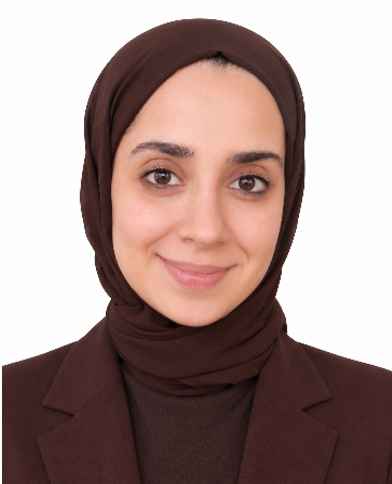 | Merve Safa Aydın Turkish language instructor, Qatar |
Turkish is attracting a growing number of learners across the Gulf region, for reasons that are cultural, educational, and professional. When I ask my students, “Why are you learning Turkish?”, their answers vary considerably: “I love the Turkish language,” “I watch Turkish TV series and want to understand them without subtitles,” “I admire Turkish culture,” “I own property in Türkiye and want to communicate more easily with Turkish people,” or “I intend to pursue postgraduate studies in Türkiye.” These responses reflect a wide range of personal, social, and academic motivations. Whatever the reason, the interest in learning Turkish is genuine and sustained. In the Gulf, it comes from people of diverse cultural and linguistic backgrounds, although the majority of learners are Arabic speakers.
Familiar words, unfamiliar grammar. In my experience, the many Arabic loanwords in Turkish give Arabic-speaking learners a real boost in motivation. Whenever I introduce a word of Arabic origin, I can see the excitement on my students’ faces, and someone usually says, “Turkish is easy!” That excitement can turn into confusion once we reach grammar, especially word order, which is quite different from Arabic. At first, some students build Turkish sentences the way they would in their first language. With time and practice, though, they begin to see the logic of Turkish sentence structure, and learning becomes much easier. Pronunciation is another challenge: a few Turkish sounds do not exist in Arabic and feel difficult at first, but regular listening and practice make them familiar. Some of my students also find speaking Turkish hard because they have few chances to practise the language outside the classroom, unlike learners living in Türkiye. For this reason, we organise Turkish speaking workshops with some educational institutions, giving students more chances to practise and speak with greater confidence.
Programmes in Qatar. Given these varying needs and challenges, educational programmes play a significant role in language learning. In Qatar, for instance, Turkish is taught at several universities, language institutes and Yunus Emre Turkish Cultural Centre. These programmes differ in proficiency levels, teaching methods, assessment practices, and instructional hours. At universities where Turkish is offered, it is generally taught as an elective course, although it is also offered as a minor programme at one university. Elective courses have fewer instructional hours than programmes offered by language institutes and the cultural centre, which may limit students’ opportunities to practise all four language skills. However, supplementary speaking, writing, and listening workshops can help learners develop these skills and make further progress.
Assessment varies. Assessment practices also vary from one programme to another. Some institutions that offer intensive courses hold separate examinations in all four skills at the end of each proficiency level. This enables teachers to identify each student’s strengths and weaknesses and to adjust subsequent lessons accordingly, for example by giving extra attention to speaking or writing where needed. It also gives learners a clearer picture of their own progress. However, at some universities examinations may focus mainly on grammar and reading, depending on the aims of the programme.
A standardised measure. Beyond institutional assessment, the Turkish Proficiency Exam (TYS), administered by the Yunus Emre Institute, offers a standardised measure of language proficiency. Its purpose is similar to that of IELTS for English or the Goethe-Institut examinations for German: it assesses reading, listening, writing, and speaking skills. The exam is internationally recognised and is particularly useful for those who need to demonstrate their Turkish proficiency for academic or professional purposes.
What should change. It is encouraging to see Turkish attracting growing interest in the Gulf region and in many other countries. To meet learners’ needs, I believe that existing programmes should be continuously improved, that effective teaching and assessment practices should be adopted, and that more Turkish courses should be offered at universities. Such measures would help learners not only to study Turkish but also to use it with confidence. ABOUT THE AUTHOR Merve Safa Aydın is a Turkish language instructor based in Qatar. She holds bachelor’s degrees in Turkish Language and Literature and in Arabic Language and Literature, and a master’s degree in Classical Turkish Literature, all from Istanbul University. Her research interests include teaching Turkish as a foreign language and comparative Turkish–Arabic studies. |
|
|
GALTA NEWS · WHAT OUR MEMBERS HAVE BEEN DOING
|
 | WEBINAR · HELD 26 OCTOBER · NOW ON DEMAND Is the EMI admissions test broken? Perhaps not. Dr Myriam Iliovits (University of Chester) spoke to GALTA members about language use and validity in an EMI university. Drawing on her research at the American University of Beirut, she asked how far the English tests that admit students reflect the language they actually use once they arrive. Her conclusion: the system is not really broken, and trying to fix it might break it. Students and staff are not complaining, which suggests the problem may be felt more by researchers than by people on the ground. Members can watch the full recording in the webinar library. |
|
|
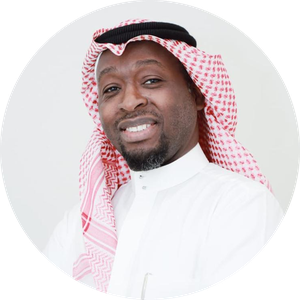 | WORKSHOP · PRINCESS NOURAH BINT ABDULRAHMAN UNIVERSITY Disrupting EFL Classrooms and Promoting Institutional Change: Action Research GALTA Director of Communications Dr Sajjadllah Alhawsawi delivered an eight-hour, two-day workshop at the English Language Institute, Princess Nourah bint Abdulrahman University (PNU). EFL instructors worked through critical discussion, collaborative enquiry and practical research design: how classroom concerns become researchable questions, how evidence can challenge assumptions, and how practitioner research can feed institutional learning and change. The workshop was sponsored by GALTA and organised with PNU’s Research and Innovation Unit, part of GALTA’s commitment to practitioner-led research in language education. |
|
|
|
DATES FOR YOUR DIARY
|
|
|
|
THE DIGEST · CALLS, CONFERENCES AND JOBS
|
|
Opportunities for the region’s language assessment community, collected for GALTA members. Deadlines are as published; check each link before you apply or submit. CALLS FOR PAPERS AND PROPOSALS Humanizing ELT in the Age of AI: TESOL Conferences 31st International Conference PROPOSALS BY 15 NOV 2026 · AUD, DUBAI · 27–28 MAR 2027 Human first, AI forward. Presenters must pre-register before submitting. Notifications 5 Dec; presenter registration by 5 Jan. CALICO Journal special issue: Ecological Integration of AI and Established Technologies in CALL EXPRESSIONS OF INTEREST BY 30 NOV 2026 · ISSUE OCT 2028 Up to 300 words to calicosi28@gmail.com. Topics include assessment for learning and academic integrity in AI-enhanced CALL. 6th International Conference on Academic and Professional Communication (ICAPC) ABSTRACTS BY 30 NOV 2026 · UNIVERSITY OF BOTSWANA, GABORONE · 6–8 JUL 2027 200–250 word abstracts. One subtheme is the assessment of academic communication. L2 Writing Research Seminar 2027: L2 Writing in the Age of AI PROPOSALS BY 15 DEC 2026 · MURCIA, SPAIN (HYBRID) · 20–22 MAY 2027 Welcomes work on AI and L2 writing, corrective feedback and assessment. Plenary: Christine Tardy. TESL Canada Journal special issue: Rethinking Evidence of Language Learning: Emerging Perspectives on Assessment ABSTRACTS BY 1 FEB 2027 · ISSUE SPRING 2028 Guest editors Heike Neumann and Carol Johnson. 400-word abstracts, in English or French, to teslcanadajournal@tesl.ca. Full papers due 15 June 2027. AI and Discourse Studies: Digitalization and Implications for the Knowledge Economy ABSTRACTS BY 1 FEB 2027 · ONLINE WORKSHOP · 17–18 JUN 2027 Extended abstracts of about 1,000 words to rene.foidl@ph-noe.ac.at. Contributions may lead to a special issue or volume. CONFERENCES AND EVENTS Language Testing Forum 2026: Methodological Choices in Language Assessment 13–15 NOV 2026 · OXFORD, UK The UK’s longest-running language testing conference and the official conference of UKALTA, hosted this year by Oxford University Press. TESOL 2026 Virtual Convention 20–21 NOV 2026 · ONLINE Keynotes from Okon Effiong, Judit Kormos and Rashad Ahmed. Promo code MAN26 saves 20% until 18 November; scan the code below to register. KASELL–KASEE Winter Joint Conference: Language, Mind, and AI 5 DEC 2026 · SEOUL NATIONAL UNIVERSITY Topics include language assessment. PhraConRep 2027: Formulaic Language and Construction Grammar 22–24 MAR 2027 · FRANKFURT, GERMANY Includes formulaic language in teaching, learning and assessment. TeachLEng 2027: Teaching and Learning English: Challenges and Perspectives 23–25 JUN 2027 · PARIS, FRANCE Second ARDAA international conference. Plenaries: Alex Boulton, Wander Lowie, Peter Ives. LTRC 2027: Language Assessment in Interdisciplinary Research 26–30 JUN 2027 · GHENT, BELGIUM The 48th Language Testing Research Colloquium, held jointly with EuroSLA 36. Workshops 26–27 June. JOBS Assistant/Associate Professor of English, Writing Studies AMERICAN UNIVERSITY OF SHARJAH · UAE · FULL CONSIDERATION BY 6 DEC 2026 PhD in Rhetoric and Composition, Applied Linguistics or a related field; publications; experience teaching undergraduate academic writing. Starts August 2027. EFL Faculty (Job 158) HIGHER COLLEGES OF TECHNOLOGY · UAE · APPLY BY 30 DEC 2026 PhD in TESOL or a relevant discipline, or a master’s plus CELTA, CertTESOL, DELTA or DipTESOL; at least three years’ teaching. Full time. Professor/Associate Professor in Instructional Design AGU UNIVERSITY · BAHRAIN · CLOSES 28 FEB 2027 Q1/Q2 publications, postgraduate teaching and supervision, and fluent Arabic and English. AGU is also offering lecturer posts with a sponsored PhD in Digital Education or Instructional Design (master’s, GPA 3.5, IELTS 6.5+). See AGU’s careers page Assistant/Associate Professor in Educational Technology HAMDAN BIN MOHAMMED SMART UNIVERSITY · DUBAI PhD in Educational Technology from an English-medium programme; graduate teaching and online learning experience; peer-reviewed publications. Instructor, Preparatory Program PRINCE MOHAMMAD BIN FAHD UNIVERSITY · AL-KHOBAR · OPEN UNTIL FILLED Master’s in TESOL or a related field (with CELTA or equivalent for related degrees) and two years’ university or foundation EFL teaching. Summer Academy: IELTS Preparation Specialist and Critical Thinking and Writing Teaching Assistant NYU ABU DHABI · 4 JUL–6 AUG 2027 · UAE CITIZENS AND RESIDENTS Two summer posts. The IELTS role asks for a master’s or PhD in Applied Linguistics, TESOL or a related subject and five years’ IELTS preparation teaching. |
Join the GALTA WhatsApp community Announcements, reminders and the occasional good argument, between issues of this newsletter.  |
Share your news New article, award, talk or role? Spotted a call, conference, job or new book for the digest? A title, a sentence and a link is all it takes. Email news@galta.org. Deadline for the December issue: 25 November. |
|
Know someone who should be reading this? Forward this issue to a colleague. Membership is currently free, and it comes with events, recordings, tools and the regional community. |
|
Gulf Association for Language Testing and Assessment
|
|
|